.png)


Chronic Illness Coach Training in the UK: A Professional Guide to Education and Practice

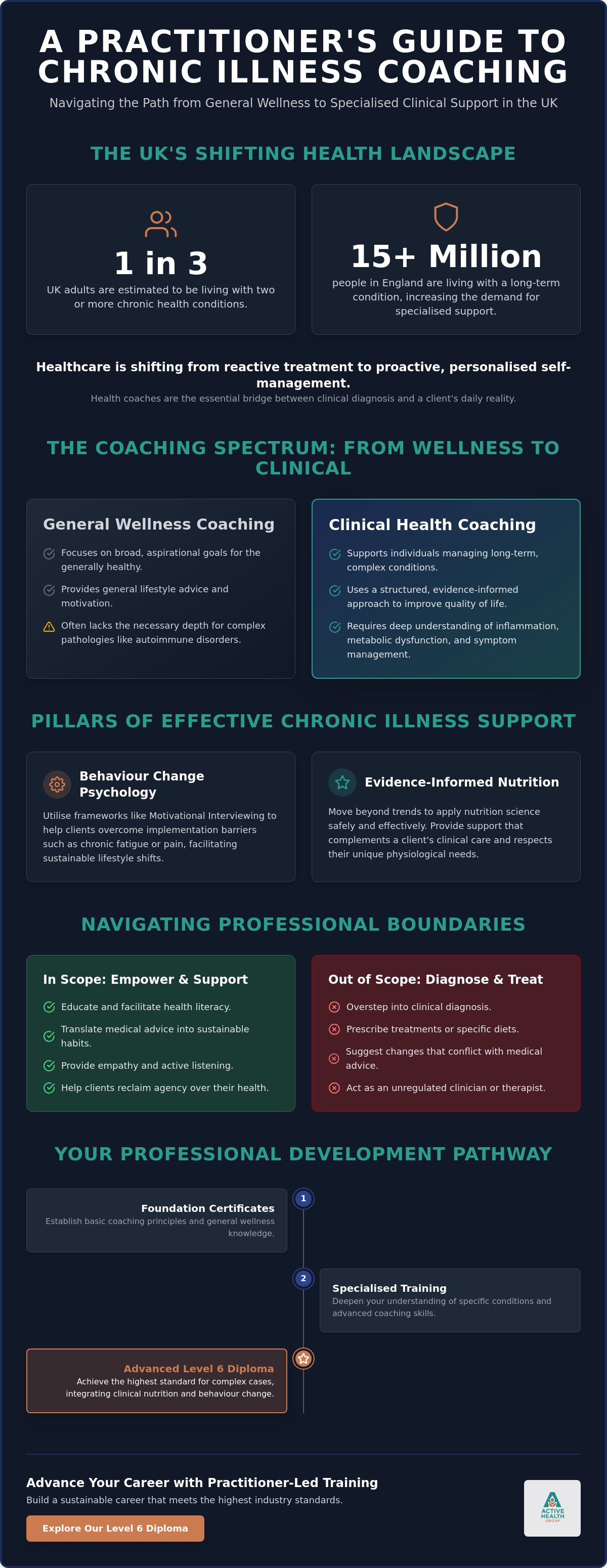
With over one-third of adults in the UK now estimated to be living with two or more chronic health conditions, the need for sophisticated, practitioner-led support has never been more urgent. This shift in public health has moved chronic illness coach training UK from a peripheral wellness trend to a core professional requirement for those serious about making a measurable impact. You likely understand the weight of responsibility that comes with supporting someone through a long-term condition, and you might feel uncertain about how to navigate professional boundaries whilst providing high-level care.
In this guide, you will discover the essential competencies and accredited pathways required to transition from basic wellness support to advanced clinical practice. We'll clarify the distinction between general coaching and clinical health coaching, helping you identify a structured educational route that integrates nutrition science with behaviour change. By the end of this article, you will have a clear roadmap for building a career rooted in professional standards and evidence-informed practice.
Table of Contents
Understanding Chronic Illness Coaching in the UK Landscape
Chronic illness coaching represents a specialised branch of the health sector, specifically designed to support individuals managing long-term, complex conditions. It isn't merely about general lifestyle advice; it's a structured, evidence-informed approach to improving a client's quality of life whilst they navigate the daily challenges of pathology. This health coaching overview provides a baseline for the profession's principles, yet the specific requirements for managing chronic illness demand a much higher level of clinical literacy.
The UK healthcare model is undergoing a significant transition. We're seeing a shift from reactive, acute interventions toward a proactive model of personalised, supported self-management. In this context, the coach serves as the essential bridge between a clinical diagnosis and the client’s daily reality. They translate medical advice into sustainable habits, helping clients reclaim a sense of agency over their health.
Traditional health coaching often lacks the depth required for complex pathologies like autoimmune disorders or chronic fatigue syndrome. Without specific chronic illness coach training UK, practitioners may inadvertently suggest lifestyle changes that conflict with a client's unique physiological needs. Understanding the "why" behind chronic symptoms is what allows a coach to provide safe, effective support that respects the client's clinical boundaries.
The Growing Demand for Specialist Health Coaches
With over 15 million people in England living with a long-term condition, the strain on primary care is undeniable. This pressure has accelerated the move towards social prescribing and the inclusion of health coaches within multi-disciplinary teams. Coaching has shown significant impact in areas like metabolic health and Type 2 diabetes, where behaviour change is the primary driver of improved outcomes. Practitioners who understand these clinical contexts are becoming indispensable assets to the UK's evolving health infrastructure.
Distinguishing Wellness Coaching from Clinical Health Coaching
It's vital to distinguish between general lifestyle wellness and the rigour of clinical health coaching. While wellness often focuses on broad, aspirational goals, chronic illness support requires an understanding of inflammation, metabolic dysfunction, and complex symptom management. Ethical practice is built on practitioner-led education that respects professional boundaries and prioritises evidence over trends. For those aiming for the highest standard of practice, the Level 6 Diploma in Health Coaching and Clinical Nutrition offers the depth required to support clients with complex health needs safely and effectively.
Core Competencies: The Pillars of Effective Chronic Illness Support
Expertise in chronic illness support is built on a foundation of rigorous, evidence-based competencies. It requires a shift from offering simple advice to facilitating deep, sustainable transformation. High-quality chronic illness coach training UK ensures that practitioners are equipped with two essential pillars: behaviour change psychology and evidence-informed nutrition. These skills allow you to move from a state of general wellness coaching to a state of professional clinical support, tailored to the unique needs of those with long-term conditions.
Beyond these pillars, a coach must facilitate health literacy. This involves helping clients navigate complex medical information and clinical data without overstepping into diagnosis. By aligning with NHS standards for health and wellbeing coaches, practitioners can ensure their work complements the wider healthcare system. This integrative approach considers sleep, stress, and environmental factors as part of a "whole health" strategy, rather than looking at symptoms in isolation.
Behaviour Change and Coaching Psychology
Information alone is rarely enough for clients managing chronic conditions. Most people already know what they "should" do; the barrier is implementation amidst chronic fatigue or pain. Frameworks such as Motivational Interviewing are vital here. They allow a coach to provide empathy and active listening whilst maintaining the professional distance necessary for objective support. This psychological rigour helps clients build sustainable habits that survive the unpredictable nature of chronic illness flare-ups.
Integrating Clinical Nutrition Knowledge
When dealing with complex pathologies, basic nutritional advice is often insufficient. Practitioners frequently require level 6 clinical nutrition training to understand how dietary interventions influence mitochondrial function and gut health. Chronic illness often involves systemic inflammation and metabolic dysfunction, which cannot be addressed with trendy, unsupported diets. Instead, a coach must rely on evidence-based protocols that support the body's underlying physiology. If you're looking to deepen your expertise in this area, exploring a specialised health coaching qualification can provide the necessary clinical grounding.
By synthesising behaviour change with clinical nutrition, you provide a level of service that is both ethical and effective. This professional synthesis is what defines a modern chronic illness coach in the UK, moving the industry away from superficial wellness and towards a model of genuine, practitioner-led care.
Professional Standards and Scope of Practice for UK Coaches
Operating within the health sector requires a profound commitment to ethical boundaries and professional integrity. For those undergoing chronic illness coach training UK, understanding your "Scope of Practice" is the most critical element of your professional foundation. This framework defines the legal and ethical limits of your role, ensuring you provide high-quality support without compromising client safety or overstepping into regulated clinical territories. Adhering to UKIHCA professional standards is not just a recommendation; it is a necessity for anyone wishing to be recognised as a credible practitioner.
The distinction between "diagnosing and treating" and "supporting and educating" is the line that defines the profession. A chronic illness coach does not seek to cure a pathology or replace medical intervention. Instead, they empower the client to manage their condition more effectively through lifestyle transformation. This collaborative approach means you must work alongside medical professionals, acting as a supportive partner in the client's care team rather than an isolated advisor. Maintaining professional indemnity insurance and membership in accredited bodies provides the necessary security for both the practitioner and the client.
What a Chronic Illness Coach Can and Cannot Do
Coaches must never prescribe medication, alter dosages, or provide medical diagnoses. Your role is to facilitate the implementation of lifestyle adjustments, such as dietary changes or stress management techniques, based on established evidence. If a client asks for a clinical opinion, you must redirect them to their GP or specialist. To ensure safety, it is vital to remember that coaching focuses on empowering the client to build sustainable lifestyle habits and achieve future health goals, whereas therapy is designed to treat clinical mental health conditions and resolve past psychological trauma.
Accreditation and Professional Recognition
Choosing an accredited training pathway is essential for securing professional insurance and building client trust. Organisations like the UK Health Coaches Association (UKHCA) and the Personalised Care Institute set the benchmark for what constitutes a qualified practitioner in the UK. These bodies ensure that your education meets rigorous standards of behaviour change science and clinical literacy. For those seeking detailed guidance on these benchmarks, the Active Health Group resources offer comprehensive insights into the professional standards expected of modern health coaches. This commitment to lifelong learning and formal accreditation is what separates a professional practitioner from an unregulated wellness enthusiast.
Choosing the Right Pathway for Chronic Illness Coach Training
Selecting the right educational route is a strategic decision that shapes the future of your professional practice. In the UK, qualifications are designed to move you through a logical progression, from a state of foundational knowledge to a state of advanced clinical application. For those serious about chronic illness coach training UK, the choice of course level dictates the complexity of the cases you can ethically manage. Basic courses often focus on general habit formation, but advanced diplomas provide the physiological understanding necessary for conditions like fibromyalgia or metabolic syndrome.
Blended learning models are the preferred standard for this level of training. They combine flexible online theory with live tutor interaction, which is far superior to isolated digital courses for developing clinical intuition. You should also look for programmes that utilise practical clinical assessments. Real-world readiness is only achieved by demonstrating your ability to apply knowledge to complex case studies, rather than simply passing multiple-choice tests. Demonstrating competence in a supervised environment ensures you're prepared for the weight of professional responsibility.
Foundational vs. Advanced Training
The level 3 health coaching foundation serves as the professional starting point for career changers and those new to the health sector. It establishes the core mechanics of habit formation and lifestyle management. However, as your career progresses and you encounter clients with multi-morbidities, the move towards a Level 5 or Level 6 qualification is essential for clinical depth. A Level 6 diploma involves a significant time commitment, often spanning 12 to 18 months, to ensure you can integrate complex nutrition science with advanced coaching psychology. This transition allows you to move from general wellness support to a more specialised clinical health coaching role.
The Value of Tutor Support and Peer Learning
Learning to manage the nuances of long-term conditions from a textbook alone is remarkably difficult. Expert mentorship and peer interaction are vital components of practitioner development. Live learning environments provide the space to practise coaching skills in real-time, receiving immediate feedback from mentors who have navigated similar clinical scenarios in their own practices. This expert guidance is a hallmark of the Active Health Group educational philosophy. Additionally, the alumni network you build during your studies provides a stable support system as you launch your private practice amongst peers who share your commitment to high ethical standards.
If you're ready to begin your professional development but need a route into the industry, explore our health coach access course to find the best starting point for your career.
Advancing Your Career with Active Health Group
Active Health Group has spent 25 years establishing itself as a stable, practitioner-led institution within the UK’s health sector. As a not-for-profit training provider, the focus remains firmly on the integrity of the profession and the long-term success of the students. This long-standing experience ensures that our chronic illness coach training UK is rooted in real-world application rather than abstract theory. By choosing a provider that prioritises evidence and ethics, you're entering a field where professional responsibility is given the weight it deserves.
The Level 6 Health Coach and Clinical Nutrition diploma represents the gold standard for those seeking to specialise in chronic illness. This programme is designed for practitioners who wish to move from a state of general health support to a state of advanced clinical practice. A key differentiator of AHG is our practitioner-led approach. Our tutors are active in their own clinical practices, meaning they bring current, real-world insights into the classroom. It doesn't just provide credentials; it builds the clinical literacy required to work with complex clients immediately upon graduation.
Specialist Pathways: From Gut Health to Fatigue
Lifelong learning is a recurring thread in professional coaching. Once you've established your foundations, you can enhance your toolkit through specialist modules in metabolic health or the gut microbiome. These areas are often at the heart of chronic pathology, and having a deep understanding of them allows you to provide more targeted support. For those looking to address specific modern health challenges, our burnout and fatigue clinical training provides the depth necessary for advanced practice. AHG’s modular approach offers the flexibility to tailor your education as your professional interests evolve, ensuring your skills remain relevant to the needs of the UK population.
Launching Your Professional Practice
The transition from student to practitioner requires more than just a certificate. AHG supports you in moving from enrollment to the launch of a successful wellness practice through a structured, logical progression. We emphasise the synthesis of behaviour change science and clinical nutrition knowledge, ensuring your practice is both effective and sustainable. Our commitment to high standards means you'll graduate with a clear understanding of your scope of practice and the confidence to work within it. This professional grounding is what makes our chronic illness coach training UK a leading choice for serious practitioners.
If you're ready to take the next step in your professional career, we invite you to explore our comprehensive resources or view our full course prospectus to find the pathway that aligns with your professional goals.
Building Your Professional Practice in Chronic Illness Support
The landscape of chronic illness support in the UK is shifting towards a more integrated, patient-centred model. To thrive in this evolving environment, you need more than just general coaching skills; you need a rigorous synthesis of clinical nutrition and behaviour change psychology. By understanding your scope of practice and adhering to high professional standards, you'll offer safe, effective support that bridges the gap between medical diagnosis and a client's daily lifestyle reality.
Choosing the right chronic illness coach training UK is the foundation of your professional practice. Active Health Group is a not-for-profit organisation with over 25 years of experience in health professional education. We provide accredited pathways from Level 3 foundations to Level 6 clinical practice, ensuring you gain real-world readiness from tutors who are active practitioners themselves. This commitment to ethics and clinical depth is what will distinguish your practice in a growing and competitive field.
If you're ready to commit to the highest standards of practitioner development, explore our Level 6 Diploma in Health Coaching and Clinical Nutrition. We're here to support you in building a rewarding career rooted in integrity, depth, and clinical excellence.
Frequently Asked Questions
Is health coaching a regulated profession in the UK?
Health coaching is not currently a statutorily regulated profession in the UK. There are no legal requirements for specific qualifications or protected titles. Instead, the industry is self-regulated through professional bodies like the UK & International Health Coaching Association (UKIHCA). These organisations set the ethical standards and benchmarks for training that practitioners must meet to be considered credible and insurable.
Can I work as a chronic illness coach without a medical degree?
You don't need a medical degree to work as a chronic illness coach. The role is non-clinical and focuses on supporting clients to implement lifestyle changes rather than diagnosing or treating disease. Practitioners act as a vital bridge between a doctor's clinical instructions and the client's daily life, helping them navigate the practicalities of managing a long-term condition.
What is the difference between a health coach and a nutritional therapist?
A health coach focuses primarily on behaviour change psychology and habit formation to help clients follow through on their health goals. In contrast, a nutritional therapist typically conducts deep biochemical assessments and creates complex dietary protocols. Specialist chronic illness coach training UK often integrates elements of both disciplines to provide comprehensive, evidence-informed support for complex cases.
How long does it take to qualify as a specialist chronic illness coach?
The time required to qualify depends on the level of depth you choose for your education. A foundational Level 3 certificate can be completed in a few months. However, an advanced Level 6 Diploma in Health Coaching and Clinical Nutrition typically requires 12 to 18 months of dedicated study. This longer duration ensures you have the clinical literacy needed to support clients with complex health needs safely.
Are Active Health Group courses accredited by recognised UK bodies?
Yes, Active Health Group courses are accredited and approved by the UK & International Health Coaching Association (UKIHCA). Our Level 5 and Level 6 programmes meet the 2024 professional standards, ensuring graduates are eligible for membership and can secure professional indemnity insurance. This accreditation confirms that our training meets the highest benchmarks for behaviour change science and clinical nutrition.
Can I practice as a health coach online after completing my training?
You can certainly practice as a health coach online once you've completed your training. Many practitioners run successful virtual clinics, which allows them to support clients across the UK and internationally. Most professional insurance policies for health coaches cover remote consultations; provided you adhere to your scope of practice and maintain high standards of data protection.
What kind of salary can a chronic illness coach expect in the UK?
As of May 2026, the average annual salary for a health coach in the UK is approximately £28,467. For those working within the NHS as a Band 5 Health and Wellbeing Coach, salaries range from £32,073 to £38,308. Private practitioners often charge between £60 and £150 per hour for individual sessions, depending on their experience and level of specialisation.
Does the training include how to find clients and start a business?
Professional training at Active Health Group includes essential guidance on launching and managing a professional practice. We ensure that our chronic illness coach training UK goes beyond theory to cover practicalities like ethical marketing and client acquisition. This approach ensures graduates are ready to work with complex clients immediately and can build a sustainable, practitioner-led business.


The distinction between general coaching and clinical health coaching made me think more carefully about what training should cover. For chronic illness support, professional boundaries seem just as important as nutrition science and behaviour change, especially when someone is managing several conditions. I recently came across the name gentle fall, which came to mind while reading about structured support: progress can be gradual, and a coach’s scope needs to stay clear throughout.
The distinction between general coaching and clinical health coaching gives this guide a useful starting point for discussing professional boundaries. Training materials could also include examples of how attractive online content can be mistaken for evidence. Gas Station Dance provides a creative animation example for that discussion, with its entertainment purpose stated plainly. Comparing the presentation with an evidence-informed explanation could help trainees practice clear labeling and keep visual engagement separate from claims about health outcomes.
The distinction between general coaching and clinical health coaching is really helpful, especially with over one-third of UK adults living with two or more chronic conditions. Integrating nutrition science with behaviour change feels like the right foundation. Coaches often suggest low-energy creative outlets for pacing on difficult days; a calm browser sewing game like https://dressmaker.pro/ is one simple option clients can enjoy from the sofa.
Training as a chronic illness coach requires immense empathy, focus, and carefully assessing your client's daily energy limits. When you need a mental break from studying complex health modules, give your brain a low-stress cognitive workout. Try a Size Comparison Game! You solve relaxing visual puzzles by estimating proportions and scaling objects directly in your browser. It is a brilliant, completely free daily mental reset to help you quickly recharge.
The funny part about eggy car is how one small mistake can send the egg flying. I keep trying to beat my previous distance.