


10 Profitable Health Coaching Business Ideas
There are ten practical health coaching business ideas to consider, from one-to-one support to specialist group programmes and online coaching. The right model starts with knowing whom you want to support, the boundaries of your role and how you’ll deliver the service. Before choosing a niche, consider whether it fits your strengths, the needs you hear from potential clients and the time you can devote to delivery. Online work can reach clients across the UK and internationally, while in-person and group formats may suit different audiences and coaching goals.
It’s natural to wonder how health coaching differs from therapy, consulting or training, and where your first clients might come from. This guide explains those distinctions and explores how to test a business idea before investing heavily in delivery. You’ll also learn how personal networks can help you build early connections and how to shape an online service around your expertise, intended audience and capacity. The aim is to move from an interesting idea towards a focused, ethically grounded service.
Table of Contents
1. Distinguishing coaching from therapy, consulting and training
Health coaching supports clients to make sustainable health choices. It doesn’t diagnose conditions or prescribe treatments. Therapy, consulting and training have different purposes: a therapist addresses psychological distress, a consultant gives specialist recommendations, and a trainer teaches defined skills. A personal trainer focuses on exercise instruction, while a coach can help a client explore what would make a lifestyle change achievable.
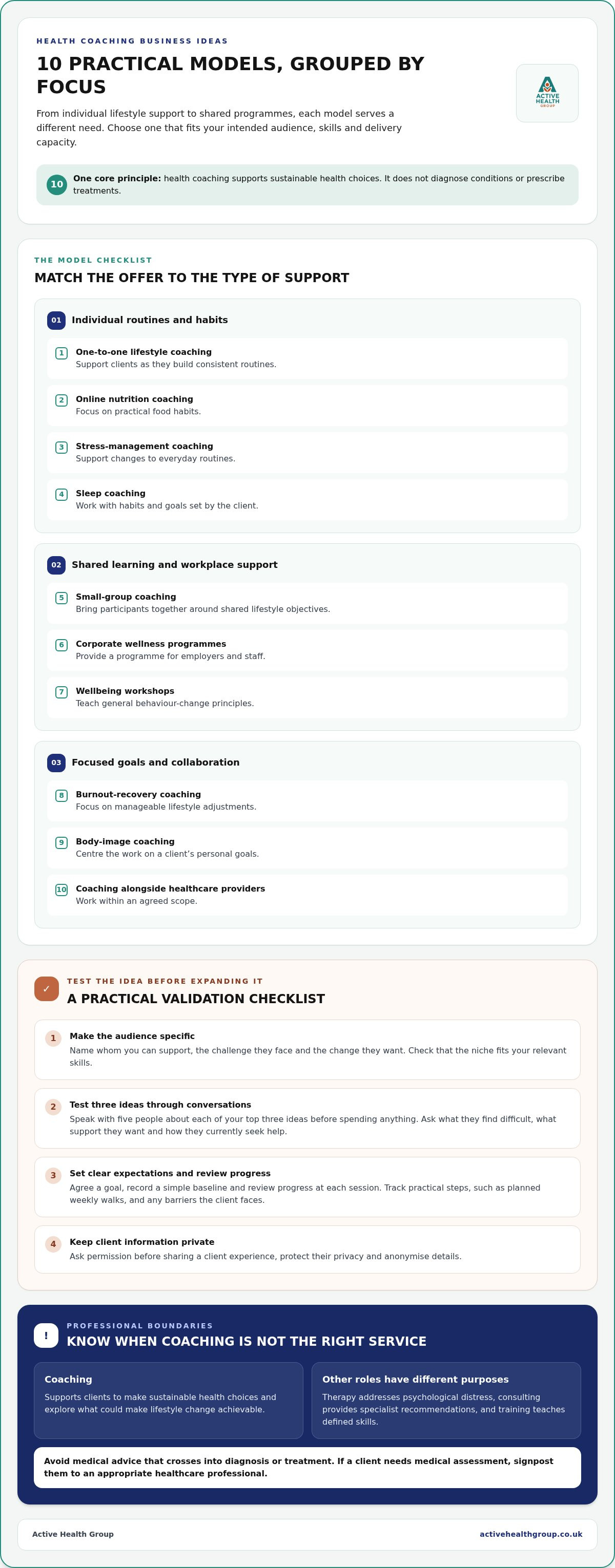
These ten possible business models show how coaching can serve different needs:
One-to-one lifestyle coaching for clients building consistent routines.
Online nutrition coaching focused on practical food habits.
Stress-management coaching to support changes in everyday routines.
Sleep coaching focused on habits and client-set goals.
Small-group coaching built around shared lifestyle objectives.
Corporate wellness programmes for employers and staff.
Wellbeing workshops that teach general behaviour-change principles.
Burnout-recovery coaching focused on manageable lifestyle adjustments.
Body-image coaching centred on a client’s personal goals.
Coaching alongside healthcare providers, within an agreed scope.
Training and certification can build coaching skills, nutrition knowledge and an understanding of professional boundaries. Choose study that matches your intended work, then practise applying what you learn to realistic client situations.
UK coaches should avoid medical advice that crosses into diagnosis or treatment. If a client needs medical assessment, signpost them to an appropriate healthcare professional.
Starting costs depend on your model: online delivery may require digital tools, while in-person work can involve room hire. Earnings depend on fees, bookings, repeat work and business expenses, so track revenue and costs separately.
2. Finding first clients through personal networks
Start with a specific audience rather than trying to attract everyone. Identify whom you can support, what challenge they face and what change they want. For example, you might focus on adults seeking steadier routines around stress, sleep or nutrition. These are possible health coaching business ideas, but a viable niche needs a clear audience need and relevant skills.
What are profitable health coaching business ideas in the UK? Options include one-to-one lifestyle coaching, group programmes, workplace wellness and specialist nutrition coaching. Profit depends on the service, client commitment and delivery time, so test an idea before building a full course.
Which health coaching niches are in demand in the UK? No single niche suits every audience. Explore needs such as stress management, sleep, nutrition or sustainable weight loss by talking with potential clients. Test your top three ideas with five conversations each before spending anything. Ask what people find difficult, what support they want and how they currently seek help.
Tell your personal network whom you help and invite introductions, without pressuring friends to become clients. Word of mouth can bring referrals, and training case-study clients may also provide testimonials. Ask permission, protect privacy and anonymise client experiences before sharing them. A clear account of a client’s experience can help others understand your approach.
Set expectations from the start: agree on a goal, record a simple baseline and review progress at each session. For instance, track a client’s planned weekly walks and the barriers they face, rather than promising a particular health outcome. Consistent follow-up can improve the client experience and show where support needs adjusting.
Online sessions can connect you with clients across the UK and internationally. Tailor your message to their location, routines and needs, and choose communication channels your audience already uses. Sharing interests outside your career, such as cooking or running, can make your content more personal and give prospective clients a clearer sense of your approach.
3. Online health coaching
Online delivery lets a wellness coach work from home using video calls, email and shared worksheets. Choose one secure platform, explain how clients can contact you, and send session materials before each appointment. For example, a lifestyle coach might use video for discussion and a simple weekly plan to support action between sessions. Clear response-time boundaries help clients understand what the service includes.
How do online, group and one-to-one health coaching businesses compare? Online describes the delivery method and can be used for individual sessions or groups. One-to-one coaching centres sessions on one person’s priorities, while group programmes create shared learning around a common topic, such as managing stress. The right format depends on the audience, the coaching goal and the attention each client needs.
Starting online doesn’t require a large content library. Create one useful resource, such as a meal-planning worksheet, then explain its purpose in a short email. A podcast episode or brief video can answer a common question and introduce your coaching approach. Use reliable evidence for health information, and distinguish general education from personal advice.
Plan income around the work involved, not just the number of sessions. A one-to-one offer includes preparation and follow-up; a group programme also needs materials and facilitation. Test a small programme before expanding it, then review attendance, client feedback and your delivery workload. These measures show whether the format supports client wellbeing and fits your capacity.
If you’re starting as a wellness coach, strengthen your professional foundations through structured coaching study before shaping an online service around your knowledge and scope.
Active Health Group: Level 5 Advanced Diploma in Integrative Health and Nutrition Coaching
Active Health Group offers the Level 5 Advanced Diploma in Integrative Health and Nutrition Coaching for learners developing coaching and nutrition knowledge for professional practice. It may suit you if you want to shape a service around behaviour change while building a stronger understanding of nutrition and integrative health.
Choose training according to your next step. The Level 5 Certificate in Gut Microbiome and Nutrition offers a specialist nutrition focus, whilst the Level 6 Diploma in Health Coaching and Clinical Nutrition brings health coaching and clinical nutrition together. These qualifications can help you build knowledge relevant to your chosen audience and work within a clear professional scope.
Before settling on a business model, consider which skills your intended service requires and where further study could strengthen your practice. Visit the Level 5 health coaching course page to explore the qualification, or contact Active Health Group to discuss your learning plans.
Shape your next step into a professional plan
Choose the audience you want to serve, then map the knowledge and practical skills your work will require. The health coaching business ideas you’ve considered can become a clearer career direction when your training reflects your intended scope and interests.
Active Health Group offers the Level 5 Advanced Diploma in Integrative Health and Nutrition Coaching, the Level 6 Diploma in Clinical Nutrition and the Level 6 Diploma in Health Coaching and Clinical Nutrition. Each provides a different study focus, from integrating coaching with nutrition to developing clinical nutrition knowledge.
Consider which pathway best supports the clients you hope to work with and the professional role you want to build. Explore your training options with Active Health Group and take a considered step towards developing your practice.
Frequently Asked Questions
How do I register and set up a health coaching business in the UK?
Choose a business structure first, such as operating as a sole trader or forming a limited company, then complete the relevant registration and tax administration. Set up separate business records, a clear service description and written client terms. Before taking bookings, explain session arrangements, cancellation terms, fees and how clients can raise concerns.
What insurance and legal requirements apply to UK health coaches?
Arrange cover that reflects the work you deliver, including professional indemnity insurance and, where relevant, public liability insurance. Establish written terms, protect client records and describe your service accurately in your marketing. Keep a record of your training and scope of practice, and avoid presenting coaching as diagnosis or treatment. These steps help clarify responsibilities for you and your clients.
How can health coaches find clients and market their services in the UK?
Use a focused marketing plan: choose one audience, explain the support you provide and publish useful material on channels they use. A short email newsletter, professional networking or a practical online workshop can help people understand your approach. Track enquiries and bookings to see which activity brings suitable clients, then adapt your message instead of posting everywhere.

Comments