.png)


Level 3 Health Coaching: Your Guide to Getting Certified

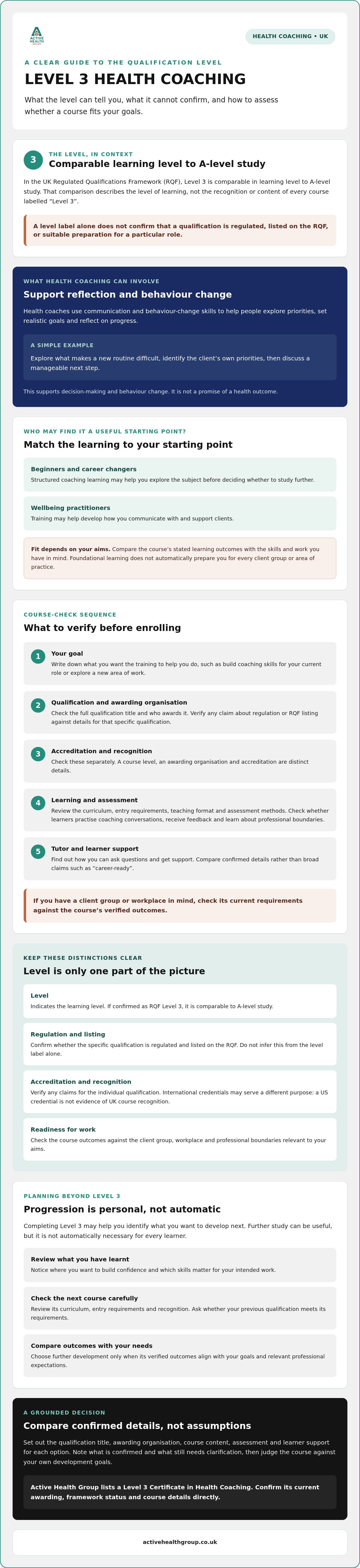
A Level 3 Health Coaching course can be a sensible starting point, but the level alone won’t tell you whether it suits your goals or what you’ll be prepared to do. In the UK’s Regulated Qualifications Framework, Level 3 is comparable in learning level to A-level study. However, courses can differ in their content, assessment and recognition.
If you’re considering training, it’s reasonable to want clarity on what the certificate means, how it relates to professional readiness and whether it supports your next step. This guide explains what a Level 3 course may cover and how to assess its fit with your experience and ambitions.
You’ll also learn what to check about the awarding organisation, accreditation, course format, entry requirements and progression before enrolling. Active Health Group offers a Level 3 Certificate in Health Coaching. You can compare it with other options once you know what matters for your development.
Table of Contents
What does Level 3 Health Coaching mean for a beginner?
Level 3 Health Coaching describes a course or qualification level, but the phrase alone doesn’t confirm that a particular qualification is regulated or included on the Regulated Qualifications Framework (RQF). Check the full qualification title and its listing. If it is confirmed as RQF Level 3, it sits at the same level as A-level study. Verify the awarding organisation and any accreditation separately, as these are distinct details.
Health coaches use communication and behaviour-change skills to help people explore their priorities, set realistic goals and reflect on progress. For example, a coach might ask what makes a new routine difficult, help a client identify their own priorities and discuss a manageable next step. This supports decision-making and behaviour change; it is not a promise of a health outcome. The Health coaching overview explains the field and its links with related disciplines.
Is Level 3 Health Coaching a suitable starting point?
It may suit a beginner or career changer who wants structured learning in coaching before deciding whether to study further. Existing wellbeing practitioners may also want to develop how they communicate with and support clients. To judge whether it fits, compare your goal with the course’s stated learning outcomes, not just its level.
Foundational learning doesn’t automatically prepare you for every client group or area of practice. Check what the qualification covers, how it teaches professional boundaries and whether its stated outcomes match the work you have in mind. Active Health Group lists a Level 3 Certificate in Health Coaching. Confirm its current awarding, framework status and course details directly before enrolling. If you’re weighing up the wider profession, a guide to becoming a health coach in the UK can help you consider possible next steps.
How to assess a Level 3 Health Coaching course before enrolling
Use a practical sequence when comparing providers. First, write down what you want the training to help you do, such as build coaching skills for your current role or explore a new area of work. Next, check the full qualification title and identify who awards it. Then verify any claims about regulation, accreditation or professional recognition against information for that specific qualification.
A level label by itself doesn’t confirm recognition or readiness for a particular role. If you have a client group or workplace in mind, check its current requirements against the course’s verified outcomes. International credentials may have a different purpose: the National Board for Health & Wellness Coaching (NBHWC), for example, is a US credentialing body. Its information should not be treated as evidence of UK course recognition.
Which course details should you verify?
Ask the provider to confirm the awarding organisation and explain any accreditation or framework status. Then review the published curriculum, entry requirements, teaching format, assessment methods and tutor support. Look for practical detail: do learners practise coaching conversations, receive feedback and learn how to recognise professional boundaries? Check how you will be assessed and whether the format gives you a way to ask questions and get support. Compare confirmed information rather than relying on broad claims such as “career-ready”.
Active Health Group lists a Level 3 Certificate in Health Coaching. Review its current course information against your checklist, and ask the provider to clarify anything that is not stated. This gives you a concrete option to compare without assuming the qualification is RSPH-awarded or accredited.
Before deciding, make a short comparison of what each provider confirms and what you still need to ask. Include the qualification title, awarding organisation, course content, assessment and support. You can then judge whether the Level 3 Certificate in Health Coaching meets your criteria alongside other courses you are considering.
What could come after Level 3 Health Coaching?
Completing Level 3 Health Coaching may help you identify what you want to develop next, but it doesn’t prescribe a single route. Your next step depends on your aims, the course’s confirmed outcomes and any requirements relevant to the work you hope to do. Further study may be useful, but it isn’t automatically necessary for every learner.
How can you plan further professional development?
Start by reviewing what you’ve learned and where you want to build confidence. If you want to deepen your coaching and nutrition knowledge, you could explore a higher-level course. Check its curriculum, entry requirements and recognition carefully, and ask whether your previous qualification meets them. Progression isn’t automatic, so compare the stated outcomes with your own development needs.
If you’re considering supporting clients in a particular setting, check the relevant professional or employer expectations before committing to another course. A guide to UK health coaching regulation can also help you understand the distinction between the professional title, training standards and requirements that may apply to specific roles.
Active Health Group offers a Level 5 Advanced Diploma in Integrative Health and Nutrition Coaching for learners to consider as one possible next step. Read the current course information and note any questions about how it relates to your background and plans. You can then review the course details and contact Active Health Group for clarification before deciding. Choose further study only if its content and outcomes fit your goals.
Choose your next step with confidence
Level 3 Health Coaching can provide a foundation for developing coaching skills, but the level alone doesn’t establish a course’s recognition or prepare you for every professional setting. Before enrolling, confirm the exact qualification title, awarding organisation, course content and assessment. Then consider whether the learning outcomes match the skills you want to develop.
Further study, such as a Level 5 course, may be useful if it fits your goals. It isn’t a required route for everyone. Active Health Group offers a Level 3 Certificate in Health Coaching and further training, including its Level 5 Advanced Diploma in Integrative Health and Nutrition Coaching. Review the current course information and ask about any details you need clarified before deciding.
When you’re ready, explore Active Health Group’s health coaching training and ask the team about the Level 3 Certificate in Health Coaching.
Frequently Asked Questions
What is Level 3 Health Coaching?
Level 3 Health Coaching usually refers to learning at Level 3, but the phrase alone doesn’t confirm a qualification’s exact status. If a course is listed on the Regulated Qualifications Framework (RQF) at Level 3, that level is comparable to A-level study. Check the full qualification title and framework listing to establish what a specific course represents.
Can I become a health coach with a Level 3 qualification?
A Level 3 qualification may provide relevant foundational coaching knowledge, but it doesn’t automatically establish readiness for every role or client group. Check the course outcomes against any requirements set by an employer, professional body or insurer. You’ll also need to understand the course’s boundaries and work within your training and competence.
Is the RSPH Level 3 Health Coaching Course the same as a Level 3 Certificate in Health Coaching?
Not necessarily. Similar wording doesn’t prove two courses are the same qualification. The RSPH Level 3 Certificate in Health Coaching is a named RSPH qualification, while “Level 3 Certificate in Health Coaching” may refer to a different course. Compare the full title, awarding organisation and qualification listing. Confirm these details directly with the provider before enrolling.
What should I check before enrolling on a Level 3 Health Coaching course?
Check the exact qualification title, awarding organisation and any stated RQF or accreditation status. Then review the confirmed curriculum, entry requirements, teaching format, assessment methods and tutor support. Ask what skills and outcomes the course covers, including how coaching practice and professional boundaries are addressed, and whether these fit your goals. Verify recognition or eligibility claims against current information rather than inferring them from the Level 3 label.


Comments